Showing posts with label Wrasse. Show all posts
Showing posts with label Wrasse. Show all posts
Saturday, December 28, 2013
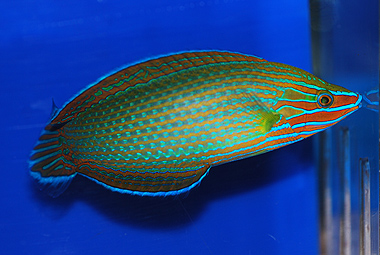
Blue Line Wrasse
I saw this guy snorkeling. There are so many wrasses! I am sure we are missing some, but the more we snorkel, the more we see.


Friday, December 6, 2013
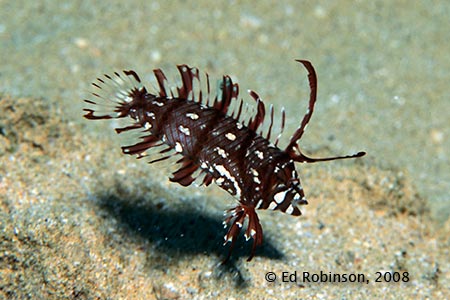
Dragon Wrasse
Back at Kalahu'u. We found if you snorkel on high tide and go the the south there is a beautiful area of a garden of corals, clear water and fish. Went this morning. It was our most enjoyable swim and also Rich's birthday.
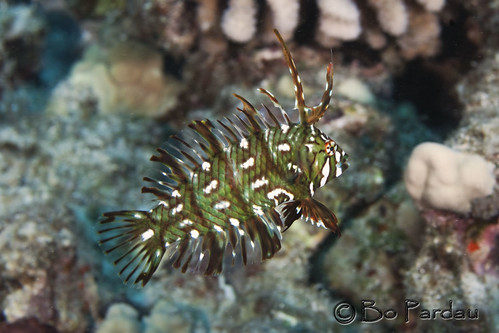
The Dragon Wrasse is a juvenile of the Rockmover Wrasse, an interesting fish already in Snaps. The Dragon Wrasse is fun to find. It looks like a piece of floating seaweed.


The Dragon Wrasse is a juvenile of the Rockmover Wrasse, an interesting fish already in Snaps. The Dragon Wrasse is fun to find. It looks like a piece of floating seaweed.
Sunday, September 9, 2012
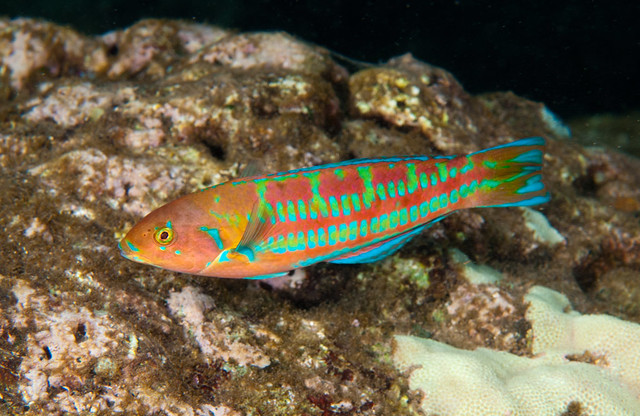
'Awela--Christmas Wrasse
We see many of these beautiful fish at Kahalu'u.
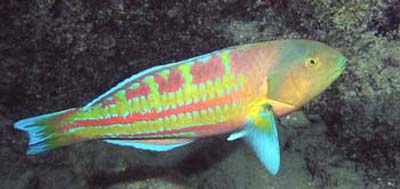
These fast-moving wrasses inhabit shallow reefs, often in the surge zone, where they feed mostly on crabs and molluscs. Terminal males have bright ladderlike blue-green markings on a reddish body. The brown and green initial phase adults (both sexes) are smaller and drab by comparison.
At night these fish sometimes sleep in tide pools just above the water line where they can be discovered by flashlight. Juveniles occur in tide pools.
The female has greenish body with irregular rows of brown spots and stripes.
Hinalea i'iiwi--Bird Wrasse

This is one of the most beautiful fish on the reef. The colors are so deep and brilliant.
The most unique aspect about the Bird Wrasse is its elongated beak which is used to catch long, skinny prey and hold it captive while breaking it up into bite-size pieces.
The female is brownish black, and the male is variations of green. For this reason the male is often called the Green Bird Wrasse, and the female,
the Black or Brown Bird Wrasse.


Wednesday, January 26, 2011
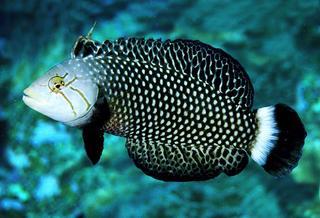
Rockmover Wrasse
Love this fish. Look at his eye makeup!
He likes areas with sand and loose coral so he can turn over rocks searching for food. Rich saw him doing this. He is one of the most active fishes on the reef. The juvenile is pretty exotic looking and is called the Dragon Wrasse.
video of rockmover wrasse at work


This is a mature juvenile. You can see the adult in his coloration.

video of rockmover wrasse at work

This is a mature juvenile. You can see the adult in his coloration.

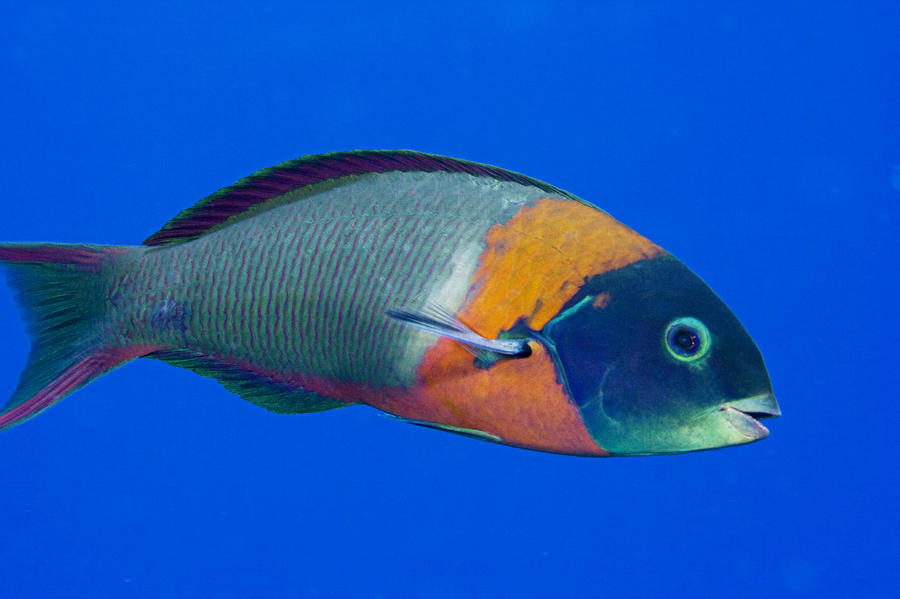
Hinalea lauwili--Saddle Wrasse
Rich called this the "red, white, and blue" fish before we identified him.


They are the most common of all the reef fish found in Hawaii. Found in areas with rubble bottoms which favors their feeding habits, the species has been observed periodically cleaning larger fish and turtles.

Juvenile Yellowtail Wrasse--Nemo Lookalike

Thought I saw "Nemo" today, but was a juvenile Yellowtail Wrasse. Here is a photo of the adult, an earlier post.
Here is the juvenile:

As you can see from the photo of the juvenile, the Adult Yellowtail Wrasse looks nothing like its youngster.
Hawaiian Cleaner Wrasse

This one Rich spotted. A beautiful, bright, colorful, small fish.
Cleaner Wrasses move about with a darting motion. They establish a cleaning station on the reef where resident fish come to have parasites removed. When a fish moves into the cleaning station, the wrasse will begin to pick and remove the parasites on the host fish.
The Cleaner Wrasse is also responsible for dental care and will often go into the mouth of larger fishes and come out the gills.
This Wrasse has an elongated, compressed body. The head is tapering and bears a pointed snout with a small mouth and thick lips. It is a Wrasse species that is small, only reaching an average length of about 3.5 inches. It has bright neon purple, black and yellow colors as an adult, and black with neon purple stripe as a juvenile.
Most Wrasses burrow into the sand at night. This species usually forms a balloon-like, mucous cocoon, and spends the night resting within it, but will burrow as well.
The name given to this fish explains exactly what it's function is, it "cleans" other fish, ridding them of parasites. When you are swimming the reef you will come across "cleaning stations" where you find other reef fish stopped for the Hawaiian Cleaner Wrasse to pick them over to remove any parasites they may have on their bodies or in their gills.
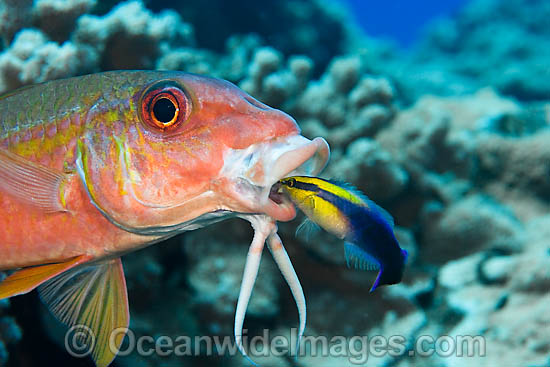
Because the Hawaiian Cleaner Wrasse's diet is mainly derived from its symbiotic relationship with other fish by eating parasites, this Wrasse does not do well in captivity. It is extremely difficult to get this fish to eat any other types of foods, and once the parasite food population is gone it results in poor health, and most likely death for the Wrasse.

Subscribe to:
Posts (Atom)